Palavras-chave
eating disorder prevention
university students
Como Citar
Resumo
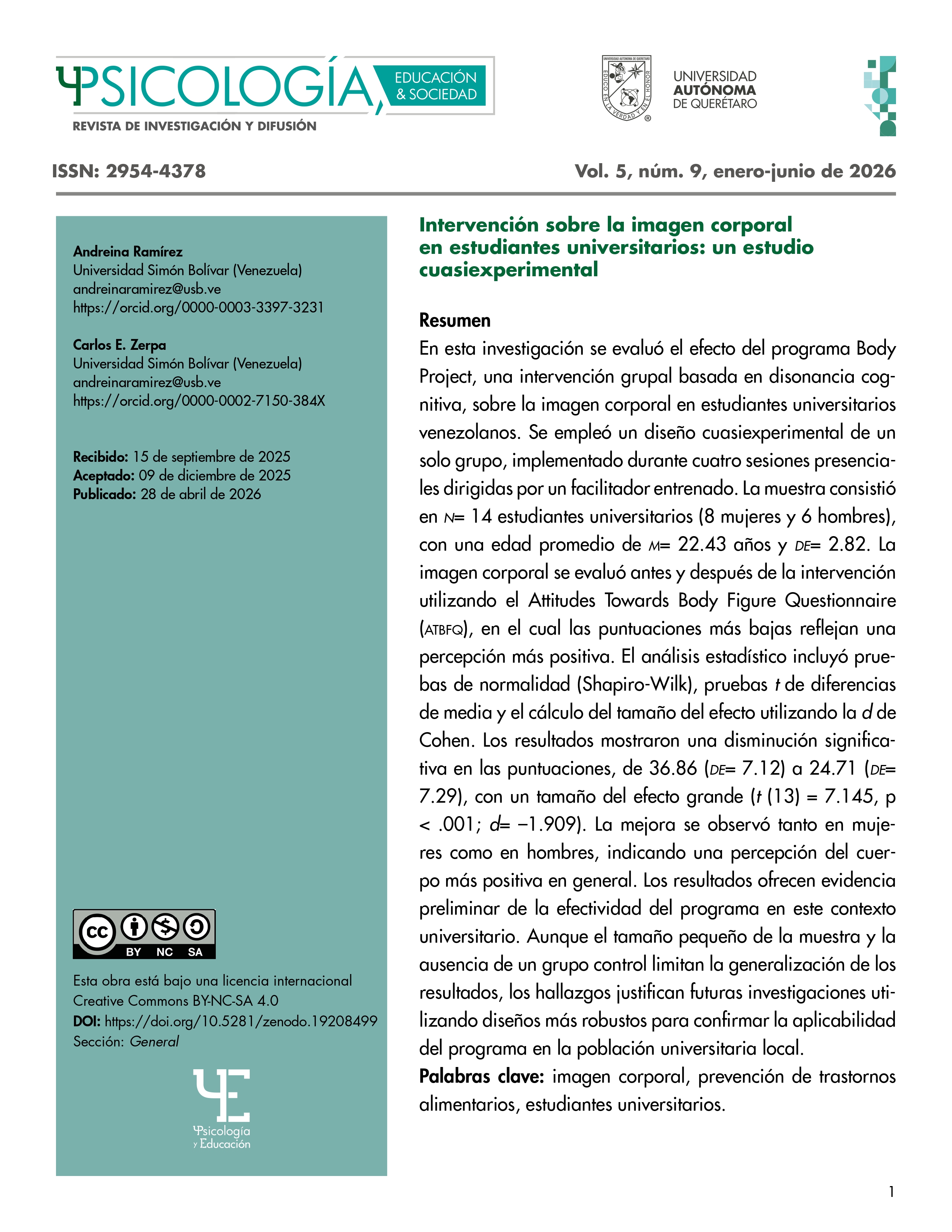
This study evaluated the impact of the Body Project program, a cognitive dissonance-based group intervention, on body image among Venezuelan university students using a single-group quasi-experimental design implemented over four in-person sessions led by trained facilitators. The sample consisted of 14 students (8 women and 6 men), with an average age of 22.43 years (SD = 2.82). Body image was assessed before and after the intervention using the Attitudes Towards Body Figure Questionnaire (ATBFQ), in which lower scores reflect a more positive perception. Statistical analysis included normality testing (Shapiro-Wilk), paired t-tests, and calculation of effect size using Cohen’s d. Results showed a significant decrease in scores, from 36.86 (SD = 7.12) to 24.71 (SD = 7.29), with a large effect size (t (13) = 7.145, p < .001; d = –1.909). The improvement was observed in both women and men, indicating a more positive body perception overall. These findings offer preliminary evidence for the effectiveness of the program in this context. Although the small sample size and absence of a control group limit the generalizability of results, the outcomes justify future research using more robust designs to confirm the program’s applicability in the local university population.

Este trabalho encontra-se publicado com a Licença Internacional Creative Commons Atribuição-NãoComercial-CompartilhaIgual 4.0.
Direitos de Autor (c) 2026 Psicología, Educación & Sociedad