
Keywords
critical pedagogy
affective pedagogy
visual literacy
digital culture
How to Cite
Abstract
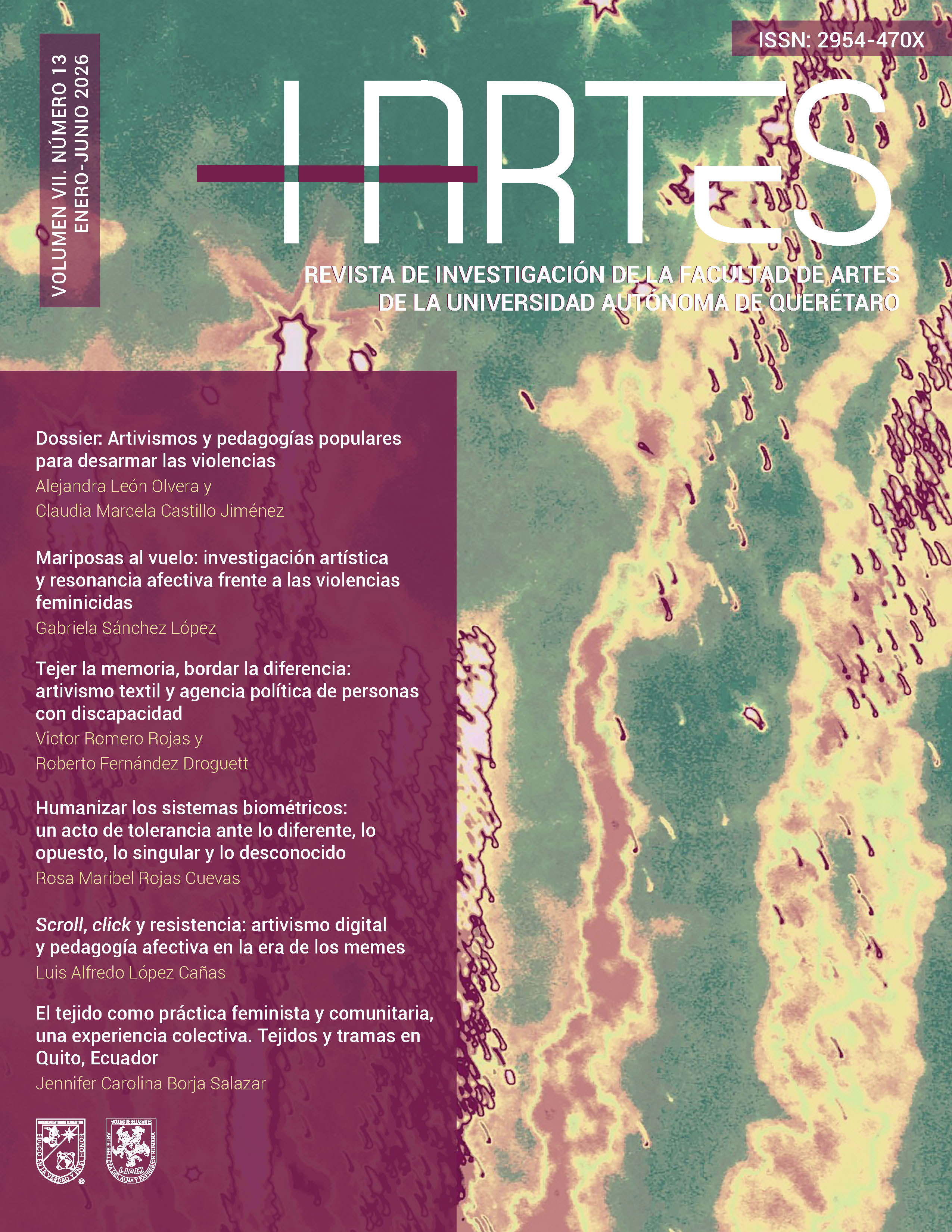
This critical essay examines the potential of digital artivism as a pedagogical tool in the teaching of design and visual communication through the analysis of six social media accounts that intertwine visual narratives, activism, and media literacy strategies. The study is situated within the paradigms of critical and affective pedagogy (Freire, 1970/2014; Giroux, 1992; hooks, 2021) and is further enriched by recent contributions on digital activism and critical visual literacy (Blaagaard & Roslyng, 2022; Hellman, & Häikiö, 2024). It is also grounded in the concept of the expanded classroom (Scolari, 2015, 2021), understood as the integration of digital environments with both formal and informal learning practices.
The selection of cases was based on their educational or political intent, as well as on the diversity of formats and their potential to foster critical reflection. The analysis is structured around three modes of interaction with teaching: autonomous engagement, deliberate integration, and incidental learning; each correlated with three pedagogical levels: extramural visual formation, critical analysis in the classroom, and the use of digital resources as didactic material. The essay argues for the urgent need of a mediating teaching role capable of contextualizing and re-signifying these practices in order to strengthen visual literacy and critical thinking within contemporary cultural languages.
References
Amnistía Internacional México. [@amnistiamexico]. (s.f). Publicaciones [Perfil de TikTok]. TikTok. Recuperado 28 de enero de 2026 de https://www.tiktok.com/@amnistiamexico?_r=1&_t=ZS-93S6Iy3LdnF
Blaagaard, B., y Roslyng, M. M. (2022). Rethinking digital activism: The deconstruction, inclusion, and expansion of the activist body. MedieKultur: Journal of Media and Communication Research, 38(72), 45-64. https://doi.org/10.7146/mk.v38i72.125721
Castillo-Esparcia, A., Caro-Castaño, L., y Almansa-Martínez, A. (2023). Evolución del activismo digital en los medios sociales: oportunidades y retos. Profesional de la información, 32(3). https://www.researchgate.net/publication/370641959_Evolution_of_digital_activism_on_social_media_opportunities_and_challenges/fulltext/645b99de6090c43d0f5e8879/Evolution-of-digital-activism-on-social-media-opportunities-and-challenges.pdf
Escobar, S., y Aguilar, M. F. (2019). Artivismo en la cultura digital. Dos casos en México: #IlustradoresConAyotzinapa y #No estamos todas. Index, revista de arte contemporáneo, (8), 142-150. https://doi.org/10.26807/cav.v0i08.273
Escoffié, C. [@carlaescoffie]. (s.f.). Publicaciones [Perfil de TikTok]. TikTok. Recuperado 28 de enero de 2026 de https://www.tiktok.com/@carlaescoffie?_r=1&_t=ZS-93S6cGxEK00
Freire, P. (2003). La importancia de leer y el proceso de liberación. Siglo Veintiuno Editores.
Freire, P. (2008). Pedagogía de la autonomía. Saberes necesarios para la práctica educativa. Siglo Veintiuno Editores.
Freire, P. (2014). Pedagogía del oprimido. Siglo XXI Editores. (Obra original publicada en 1970).
Giroux, H. A. (1992). Teoría y resistencia en educación. Una pedagogía para la opresión. Siglo XXI; UNAM.
Freire, P. (2019). La guerra del neoliberalismo contra la educación superior. Herder.
Hellman, A., y Häikiö, T. K. (2024). Visual Strategies in (Visual Arts) Education: A Critical Perspective on Reading and Making Images. Journal for Research in Arts and Sports Education, 8(1), 39-52. https://doi.org/10.23865/jased.v8.5845
hooks, b. (2021). Enseñar a transgredir. La educación como práctica de la libertad. Capitán Swing.
Jenkins, H. (2008). Convergence culture. La cultura de la convergencia de los medias de comunicación. Paidós.
Jenkins, H., Ford, S., y Green, J. (2013). Spreadable Media: Creating Value and Meaning in a Networked Culture. New York University Press.
Manovich, L. (2005). El lenguaje de los nuevos medios de comunicación. La imagen en la era digital. Paidós.
Marta Educación Libre. [@vidasincole]. (s.f). Publicaciones [Perfil de TikTok]. TikTok. Recuperado 28 de enero de 2026 de https://www.tiktok.com/@vidasincole?_r=1&_t=ZS-93S65NHOhZx
Mihăilescu, M.-G. (2024). Never Mess With the “Memers”: How Meme Creators Are Redefining Contemporary Politics. Social Media + Society, 10(4). https://doi.org/10.1177/20563051241296256
Museo de los Museos. [@museodelosmuseos]. (s.f). Publicaciones [Perfil de TikTok]. TikTok. Recuperado 28 de enero de 2026 de https://www.tiktok.com/@museodelosmuseos?_r=1&_t=ZS-93S69C7xZD7
Scolari, C. A. (2015). Ecología de los medios. Entornos, evoluciones e interpretaciones. Gedisa.
Scolari, C. A. (2016). Estrategias de aprendizaje informal y competencias mediáticas en la nueva ecología de la comunicación. Telos: Revista de Pensamiento, Sociedad y Tecnología, (103), 1-14.
Scolari, C. A. (2021). Las leyes de la interfaz: diseño, ecología, evolución, tecnología. Gedisa.
Teigeiro, V. [@veroteigeiro]. (s.f.). Publicaciones [Perfil de TikTok]. TikTok. Recuperado 28 de enero de 2026 de https://www.tiktok.com/@veroteigeiro?_r=1&_t=ZS-93S6SsAUjE9
Villarreal Guajardo, C. [@profecarlosvig]. (s.f). Publicaciones [Perfil de TikTok]. TikTok. Recuperado 28 de enero de 2026 de https://www.tiktok.com/@profecarlosvig?_r=1&_t=ZS-93S61ZobAfY

This work is licensed under a Creative Commons Attribution-NonCommercial-ShareAlike 4.0 International License.
Copyright (c) 2026 HArtes